

Monday, July 12, 2010


Sunday, July 11, 2010
The 4-2-3-1 final
There is no doubt that we have seen a paradigm shift in the essential tactical model of most international teams at the 2010 FIFA World Cup. Among the genuine candidates for glory in this competition – Spain, Holland, Germany, Brazil – gone is the predictable 4-4-2 formation with its large open spaces and defensive wide men. In its place, the 4-2-3-1 has emerged, which utilises two holding midfielders to squeeze the life out of the opposing team in central areas and relies on an ability to break dangerously on the counterattack.
Based on its current success and the global exposure enjoyed in South Africa, the prevalence of the 4-2-3-1 formation is definitely sustainable. It is not by any means a new system. In domestic Spanish football, in fact, it has become the predominant shape for the majority of teams in La Liga. so it should come as no real surprise that Vicente Del Bosque has chalked it onto the blackboard for La Roja.

For a long time it has been a given that a dominant midfield unit needs a holding player to marshal the defence and balance the more attacking sensibilities of his team. The successes of Manchester United’s treble winning team in 1998/9, Arsenal’s unbeaten league side of 2003/4 and Real Madrid’s Champions League winning Galacticos of 2002, were owed in large part to the defensive midfield mastery of Roy Keane, Patrick Vieira and Claude Makelele respectively.
When Spain conquered Europe in Austria and Switzerland two years ago, Marcos Senna was the unsung midfield hero whose discipline allowed the likes of Xavi Hernandez, Andres Iniesta, Cesc Fabregas and David Silva to weave their magic further up the pitch.
Marcos Senna has since been put out to pasture and Del Bosque has adjusted Luis Aragoneses 4-4-2 diamond formation by introducing Xabi Alonso and Sergio Busquets into defensive midfield. The change has not been entirely popular in Spain, the theory being that if they can win EURO 2008 playing sublime free-flowing football then they can do the same in the World Cup. David Villa’s heroics aside, the attacking edge has not been as sharp as it was two years ago but, as Spain have overcome the initial shock of defeat to Switzerland and steadily progressed to the final in Johannesburg, most of Del Bosque’s critics have fallen silent.
Ostensibly, the 4-2-3-1 looks like a more conservative approach, as it generally involves fielding a defence minded player at the expense of an attack minded one, as is the case with Busquets starting ahead of say, Cesc Fabregas or David Silva. It does not necessarily work out like that, though, as Germany demonstrated with the blistering four goal wins over England and Argentina.
Holland have played a more conservative version of this system as Mark van Bommel and Nigel de Jong are both suited to that style; ultimately it will probably be their success or failure in stifling Spain’s passing that will decide the final.
Spain’s approach to the 4-2-3-1 is more unorthodox as they don’t tend to use natural wingers, so the play gets congested in the middle of the park. However, the fact that they keep the ball better than any other team in the world and play almost like a 5-aside team on an 11-aside pitch allows them to be successful in narrow areas, which is partly due to the fact that their imperious passing skills extend to their two defensive midfield enforcers. This densely packed positioning in the middle also makes them particularly adept at winning back possession very quickly, which is essential to Spain’s game.
In today’s final both Holland and Spain are almost certain to set their stall out in a 4-2-3-1 shape. Barring unforeseen last minute withdrawals, Holland’s starting line-up is practically set in stone. Joris Mathijsen and Nigel de Jong will return from suspension to replace Andre Ooijer and Demy de Zeeuw in central defence and central midfield respectively, in what will be the only changes made from the semi-final win over Uruguay.
Predicting the Spanish eleven is slightly trickier, with Cesc Fabregas, Fernando Torres, Pedro Rodriguez and David Silva all competing for one place next to Xavi, Iniesta and David Villa. If I had to hazard a guess I would suggest that Fernando Torres will start up front, with Villa playing wide left, the certainty being that the back four will remain unchanged and that Sergio Busquets and Xabi Alonso will command the holding midfield.
Pedro was excellent in the semi-final victory and both he and David Silva provide the only weapon that has been missing from the Spanish armoury this month, namely natural attacking width. A fit Cesc Fabregas is also a luxury to have sitting on the bench but Torres packs a goal-scoring punch that the others don’t and he was the final hero in Vienna in 2008, scoring the only goal in the 1-0 win over Germany. He has not performed at the top level so far in South Africa, but you wouldn’t bet against him scoring at Soccer City tonight.
Based on its current success and the global exposure enjoyed in South Africa, the prevalence of the 4-2-3-1 formation is definitely sustainable. It is not by any means a new system. In domestic Spanish football, in fact, it has become the predominant shape for the majority of teams in La Liga. so it should come as no real surprise that Vicente Del Bosque has chalked it onto the blackboard for La Roja.

For a long time it has been a given that a dominant midfield unit needs a holding player to marshal the defence and balance the more attacking sensibilities of his team. The successes of Manchester United’s treble winning team in 1998/9, Arsenal’s unbeaten league side of 2003/4 and Real Madrid’s Champions League winning Galacticos of 2002, were owed in large part to the defensive midfield mastery of Roy Keane, Patrick Vieira and Claude Makelele respectively.
When Spain conquered Europe in Austria and Switzerland two years ago, Marcos Senna was the unsung midfield hero whose discipline allowed the likes of Xavi Hernandez, Andres Iniesta, Cesc Fabregas and David Silva to weave their magic further up the pitch.
Marcos Senna has since been put out to pasture and Del Bosque has adjusted Luis Aragoneses 4-4-2 diamond formation by introducing Xabi Alonso and Sergio Busquets into defensive midfield. The change has not been entirely popular in Spain, the theory being that if they can win EURO 2008 playing sublime free-flowing football then they can do the same in the World Cup. David Villa’s heroics aside, the attacking edge has not been as sharp as it was two years ago but, as Spain have overcome the initial shock of defeat to Switzerland and steadily progressed to the final in Johannesburg, most of Del Bosque’s critics have fallen silent.
Ostensibly, the 4-2-3-1 looks like a more conservative approach, as it generally involves fielding a defence minded player at the expense of an attack minded one, as is the case with Busquets starting ahead of say, Cesc Fabregas or David Silva. It does not necessarily work out like that, though, as Germany demonstrated with the blistering four goal wins over England and Argentina.
Holland have played a more conservative version of this system as Mark van Bommel and Nigel de Jong are both suited to that style; ultimately it will probably be their success or failure in stifling Spain’s passing that will decide the final.
Spain’s approach to the 4-2-3-1 is more unorthodox as they don’t tend to use natural wingers, so the play gets congested in the middle of the park. However, the fact that they keep the ball better than any other team in the world and play almost like a 5-aside team on an 11-aside pitch allows them to be successful in narrow areas, which is partly due to the fact that their imperious passing skills extend to their two defensive midfield enforcers. This densely packed positioning in the middle also makes them particularly adept at winning back possession very quickly, which is essential to Spain’s game.
In today’s final both Holland and Spain are almost certain to set their stall out in a 4-2-3-1 shape. Barring unforeseen last minute withdrawals, Holland’s starting line-up is practically set in stone. Joris Mathijsen and Nigel de Jong will return from suspension to replace Andre Ooijer and Demy de Zeeuw in central defence and central midfield respectively, in what will be the only changes made from the semi-final win over Uruguay.
Predicting the Spanish eleven is slightly trickier, with Cesc Fabregas, Fernando Torres, Pedro Rodriguez and David Silva all competing for one place next to Xavi, Iniesta and David Villa. If I had to hazard a guess I would suggest that Fernando Torres will start up front, with Villa playing wide left, the certainty being that the back four will remain unchanged and that Sergio Busquets and Xabi Alonso will command the holding midfield.
Pedro was excellent in the semi-final victory and both he and David Silva provide the only weapon that has been missing from the Spanish armoury this month, namely natural attacking width. A fit Cesc Fabregas is also a luxury to have sitting on the bench but Torres packs a goal-scoring punch that the others don’t and he was the final hero in Vienna in 2008, scoring the only goal in the 1-0 win over Germany. He has not performed at the top level so far in South Africa, but you wouldn’t bet against him scoring at Soccer City tonight.

Saturday, July 10, 2010

Friday, July 9, 2010
Price hikes
Buying players solely on the basis of World Cup performances is a very dangerous game. The World Cup is, of course, the biggest stage of all, but one or two good matches do not guarantee a top class player. Some of the shrewdest managers around have been drawn into traps on this basis: Sir Alex Ferguson’s gamble on Kleberson after the 2002 World Cup is a case in point.
However, new stars are inevitably born and that will lead to the shuffling of cheque books. Here are five players whose price tags will have shot up and could be set for big summer moves.
Keisuke Honda (Japan)
 The 24-year old Japanese star only joined CSKA Moscow in January but is already being linked with a big move west. He cost the Russian Premier League side 6 million euros from VVV Venlo and signed a four year contract at the time. Honda was extremely impressive in his debut for CSKA Moscow, which, due to the distinct Russian calendar, came in the Champions League last 16 against Sevilla. In the second leg of that tie he set up Tomas Necid for a goal and scored from a free kick to knock the Andalucian team out of Europe. He has now replaced Russian starlet Alan Dzagoev as CSKA's most marketable asset. The attacking midfielder has followed up his promising start in Russia with an eye-catching World Cup which has inevitably led to interest from some of Europe’s biggest clubs. Price: 15 million euros.
Mesut Ozil (Germany)
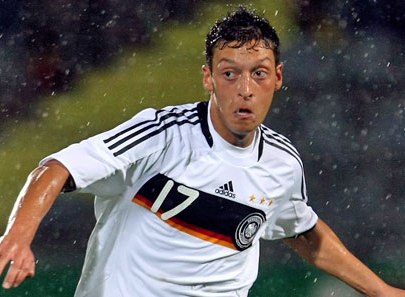
 Contrary to popular opinion in the English press, Mesut Ozil was not a “virtual unknown” heading into this tournament. The Turkish born playmaker has been on the radar of Europe’s top clubs for many years. Arsenal are being linked with a bid as a possible replacement for Barcelona-bound Cesc Fabregas and Arsene Wenger will have been aware of Ozil’s talent ever since he burst onto the scene for Schalke 04 in 2006.. Ozil guided the German under-21 team to European glory last year and has gone from strength to strength since then. He has been one of the best players at this World Cup but even before then he was always going to cost upwards of 20 million euros. The issue now with Ozil is that he is entering the last year of his contract and could be bought on the (relative) cheap as a result. Price: 25 million euros.
Fabio Coentrao (Portugal)
 Fabio Coentrao was not originally expected to start for Portugal at this World Cup, much less outshine some established superstars like Cristiano Ronaldo, but the left back displaced Luis Miguel and Paolo Ferreira as first choice under Carlos Queiroz and the manager’s faith in the player has been thoroughly justified by some standout performances. Coentrao has obviously benefited from the fact that Ferreira and Miguel were both played out of position on the left flank but credit to him for taking the opportunity to stake his place for years to come. It is no secret that the 22-year old Benfica player would prefer a role further up the pitch but it will be difficult to shake the defensive tag after this formidable World Cup showing. Price: 10 million euros.
Gregory van der Wiel (Holland)
 Bayern Munich are said to be closing in on a deal for 22-year old Holland right back Gregory van der Wiel, which is a curious move given that Germany and Bayern Munich captain Phillip Lahm currently occupies the right back berth for the Bundesliga champions. Van der Wiel has impressed for Ajax after graduating from the famous Amsterdam youth academy and has augmented his reputation with a fine World Cup showing. Bayern Munich are not the only team monitoring him; if he has any sense, van der Wiel will have doubts about joining a team where he is likely to spend a lot of time on the bench at this stage of his career. Price: 15 million euros.
Thomas Muller (Germany)
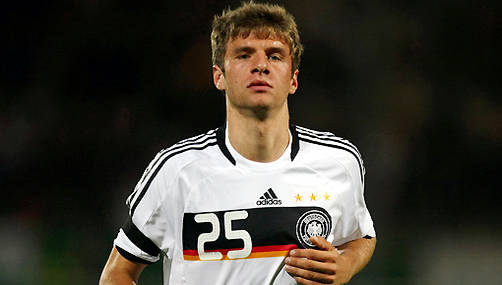
 Muller would cost an absolute fortune after his World Cup heroics. He is only 20-years old and is still in contention for the Golden Boot having already scored four goals ahead of the third place playoff outing on Saturday. Muller’s international call-up follows an incredibly successful debut season in which he scored 19 goals as Bayern Munich won a domestic double. The bad news for any potential bidders is that Bayern are extremely stubborn when it comes to selling their most prized assets and are likely to use him as the focal point of their attack for years to come. Price: 30 million euros.
However, new stars are inevitably born and that will lead to the shuffling of cheque books. Here are five players whose price tags will have shot up and could be set for big summer moves.
Keisuke Honda (Japan)

Mesut Ozil (Germany)
Fabio Coentrao (Portugal)

Gregory van der Wiel (Holland)

Thomas Muller (Germany)

Thursday, July 8, 2010
Spain triumph in the Clash of the Titans
Spain are through to their first World Cup final courtesy of a stunning Carles Puyol header, which handed Vicente del Bosque’s side a 1-0 win over Germany in Durban on Wednesday night.
It was a clash between the best two teams in this tournament. Spain won, so now they should go on to beat Holland in Sunday's final and make it a European/World Cup double.
A conservative Dutch side packed full of attacking quality stand in their way but we are looking at the best Spanish eleven of all time and I have little doubt that if both these teams play to their full potential in the final, Spain will come out on top.
 Against the Germans it was always going to be an incredibly tight affair. As is often the case with the 4-2-3-1 formation, the two nations cancelled each other out completely in the first half. Spain enjoyed more possession – they always enjoy more possession – but they struggled to break down the strong German back four and it was extremely congested in the middle of the pitch, which made it difficult for the Spanish playmakers to do their job.
For their part, the Germans seemed content to defend deep in their own territory again and allow Spain to pass the ball close to the halfway line. Germany’s most likely outlet was the counter attack and they broke a couple of times but found themselves up against an extremely determined Spanish defence. Thomas Muller was missed and Lukas Podolski fell short of the form he has shown so far in South Africa, so Low’s side were not the devastating attacking force on the wings that they were against England and Argentina. A few corners had Spanish nerves tingling but largely because of the imposing German presence and not because there was any evidence of impressive set piece coordination.
Spain’s biggest weakness goes hand in hand with their greatest strength. With this formation and with the players Del Bosque selected, there is very little natural attacking width in the side. If the coach named Jesus Navas or David Silva in his starting eleven, he would have more options out wide, but that would come at the cost of central midfield domination. As long as Del Bosque's midfielders did their job properly, it made it impossible for Germany to execute their game plan.
Marauding defender Sergio Ramos did get forward from right back to support the attack and this is where Spain could have been vulnerable to a counter attack if Podolski was a bit sharper. Low recognised this potential weakness in the second half and brought on Marcell Jansen to replace Jerome Boateng as a more attacking left back. Jansen immediately went on the offensive and this looked like a good outlet but Spain’s defensive efficaciousness is often underestimated as a result of their attractive attacking style.
Joachim Low was typically gracious in defeat and he was full of praise for Spain after his side’s exit, identifying their circulation of the ball and stifling play as the major cause of Germany’s demise. Tactically, this is Spain in a nutshell. What this observation overlooks, however, is that, man for man, Spain have the best team in the tournament on paper. Low is right to be upbeat; this young German group will come back stronger in two years time at the European Cup.
We will have a new world champion on Sunday whatever the outcome; neither Holland or Spain have ever won international football’s top prize. Hopefully it will be a thrilling encounter between two daring sides, each completely deserving of their final berth. Technically this is not the best Holland team we have ever seen at a World Cup, but they have been well disciplined and opportunistic. It is certainly the best Spanish side in history and you get the feeling that their time is now.
It was a clash between the best two teams in this tournament. Spain won, so now they should go on to beat Holland in Sunday's final and make it a European/World Cup double.
A conservative Dutch side packed full of attacking quality stand in their way but we are looking at the best Spanish eleven of all time and I have little doubt that if both these teams play to their full potential in the final, Spain will come out on top.

For their part, the Germans seemed content to defend deep in their own territory again and allow Spain to pass the ball close to the halfway line. Germany’s most likely outlet was the counter attack and they broke a couple of times but found themselves up against an extremely determined Spanish defence. Thomas Muller was missed and Lukas Podolski fell short of the form he has shown so far in South Africa, so Low’s side were not the devastating attacking force on the wings that they were against England and Argentina. A few corners had Spanish nerves tingling but largely because of the imposing German presence and not because there was any evidence of impressive set piece coordination.
Spain’s biggest weakness goes hand in hand with their greatest strength. With this formation and with the players Del Bosque selected, there is very little natural attacking width in the side. If the coach named Jesus Navas or David Silva in his starting eleven, he would have more options out wide, but that would come at the cost of central midfield domination. As long as Del Bosque's midfielders did their job properly, it made it impossible for Germany to execute their game plan.
Marauding defender Sergio Ramos did get forward from right back to support the attack and this is where Spain could have been vulnerable to a counter attack if Podolski was a bit sharper. Low recognised this potential weakness in the second half and brought on Marcell Jansen to replace Jerome Boateng as a more attacking left back. Jansen immediately went on the offensive and this looked like a good outlet but Spain’s defensive efficaciousness is often underestimated as a result of their attractive attacking style.
Joachim Low was typically gracious in defeat and he was full of praise for Spain after his side’s exit, identifying their circulation of the ball and stifling play as the major cause of Germany’s demise. Tactically, this is Spain in a nutshell. What this observation overlooks, however, is that, man for man, Spain have the best team in the tournament on paper. Low is right to be upbeat; this young German group will come back stronger in two years time at the European Cup.
We will have a new world champion on Sunday whatever the outcome; neither Holland or Spain have ever won international football’s top prize. Hopefully it will be a thrilling encounter between two daring sides, each completely deserving of their final berth. Technically this is not the best Holland team we have ever seen at a World Cup, but they have been well disciplined and opportunistic. It is certainly the best Spanish side in history and you get the feeling that their time is now.
Wednesday, July 7, 2010
Holland's first final since 1978
South Africa 2010 will conclude with a European team lifting the World Cup outside of Europe for the first time in the competition’s 80 year history. Holland’s 3-2 win over Uruguay in Tuesday’s semi-final condemned the final South American team to the scrapheap and guaranteed an all European final at Soccer City in Johannesburg on Sunday night.
Tuesday’s scoreline makes the first semi-final sound closer than it really was. Uruguay managed to level the score initially after going a goal down but were then squeezed back to a two goal deficit in the second half as the Dutch went on the offensive. Maxi Pereira’s stoppage time goal gave Bert van Marwijk a bit of a fright but his side held on to reach their third World Cup final, 32 years after the last appearance.
It was the “Total Football” team of the 1970s that last reached the final, but on two occasions – against West Germany in 1974 and Argentina in 1978 – Holland were beaten finalists.
 Uruguay exceeded expectations in this tournament. In truth they were given an “easy” route to the semi-finals thanks to France’s group stage disaster and England’s failure to finish top of their group. Oscar Tabarez’s men had too much for South Korea in the second round but were fortunate to knock out Ghana on penalties in the quarter-final after Luis Suarez’s controversial goal line hand ball and Asamoah Gyan’s subsequent last gasp penalty miss went in their favour.
As soon as La Celeste came up against an organized top class team they were found wanting. Holland have been one of the most disciplined nations at the World Cup and they have plenty of quality to boot, even if they have only shown glimpses of their true potential so far in South Africa in second half spells here against Uruguay and in the previous round against Brazil.
Bert van Marwijk employs the 4-2-3-1 formation, which has been the hallmark of the most successful teams in this tournament (and about which I will write in more detail before it concludes). When it comes to the final, Holland will face either Germany or Spain, both of whom are more than likely to play the same shape. That is where we will finally see holding midfielders Nigel de Jong and Mark van Bommel, as well as the back four – which worryingly leaked two goals against Uruguay – seriously tested.
So far, Brazil have come the closest to derailing The Flying Dutchmen with their own hybrid of the 4-2-3-1, but they are more conservative under Dunga than Holland’s potential final opponents, lack the attacking width of German or Spain and were obviously handicapped in that quarter-final match by the dismissal of Felipe Melo.
If Joachim Low or Vicente del Bosque can match Bert van Marwijk’s effective playing system then the final will come down to who has the more talented players and this is where I see Holland falling short. Their front four of Robin van Persie supported by Arjen Robben, Wesley Sneijder and Dirk Kuyt can compete with the best attacking quartets, even if Arsenal’s van Persie is still some way off top form, but behind that they are not as formidable man for man as either Germany or Spain.
Giovanni van Bronckhorst, John Heitinga, Joris Mathijsen and Gregory van der Wiel do not form a defensive unit that will strike fear into the hearts of any of the forwards that their final opponent has to offer and we saw from Diego Forlan’s goal in the semis that Maarten Stekelenburg is not immune to the occasional mishap between the sticks.
Tonight Germany face Spain in the crunch match of the tournament so far. England vs Germany was supposed to be a classic, so too was Argentina vs Germany, but on both occasions Low’s team wiped the floor with their opponent. Surely Spain are too good and too well organized to allow that to happen. Phillip Lahm and Iker Casillas will shake hands at the beginning of the match as team captains and, depending on the outcome of this match, I suspect it will be either Lahm’s or Casillas’ grubby mitts on the World Cup trophy come Sunday night.
Tuesday’s scoreline makes the first semi-final sound closer than it really was. Uruguay managed to level the score initially after going a goal down but were then squeezed back to a two goal deficit in the second half as the Dutch went on the offensive. Maxi Pereira’s stoppage time goal gave Bert van Marwijk a bit of a fright but his side held on to reach their third World Cup final, 32 years after the last appearance.
It was the “Total Football” team of the 1970s that last reached the final, but on two occasions – against West Germany in 1974 and Argentina in 1978 – Holland were beaten finalists.

As soon as La Celeste came up against an organized top class team they were found wanting. Holland have been one of the most disciplined nations at the World Cup and they have plenty of quality to boot, even if they have only shown glimpses of their true potential so far in South Africa in second half spells here against Uruguay and in the previous round against Brazil.
Bert van Marwijk employs the 4-2-3-1 formation, which has been the hallmark of the most successful teams in this tournament (and about which I will write in more detail before it concludes). When it comes to the final, Holland will face either Germany or Spain, both of whom are more than likely to play the same shape. That is where we will finally see holding midfielders Nigel de Jong and Mark van Bommel, as well as the back four – which worryingly leaked two goals against Uruguay – seriously tested.
So far, Brazil have come the closest to derailing The Flying Dutchmen with their own hybrid of the 4-2-3-1, but they are more conservative under Dunga than Holland’s potential final opponents, lack the attacking width of German or Spain and were obviously handicapped in that quarter-final match by the dismissal of Felipe Melo.
If Joachim Low or Vicente del Bosque can match Bert van Marwijk’s effective playing system then the final will come down to who has the more talented players and this is where I see Holland falling short. Their front four of Robin van Persie supported by Arjen Robben, Wesley Sneijder and Dirk Kuyt can compete with the best attacking quartets, even if Arsenal’s van Persie is still some way off top form, but behind that they are not as formidable man for man as either Germany or Spain.
Giovanni van Bronckhorst, John Heitinga, Joris Mathijsen and Gregory van der Wiel do not form a defensive unit that will strike fear into the hearts of any of the forwards that their final opponent has to offer and we saw from Diego Forlan’s goal in the semis that Maarten Stekelenburg is not immune to the occasional mishap between the sticks.
Tonight Germany face Spain in the crunch match of the tournament so far. England vs Germany was supposed to be a classic, so too was Argentina vs Germany, but on both occasions Low’s team wiped the floor with their opponent. Surely Spain are too good and too well organized to allow that to happen. Phillip Lahm and Iker Casillas will shake hands at the beginning of the match as team captains and, depending on the outcome of this match, I suspect it will be either Lahm’s or Casillas’ grubby mitts on the World Cup trophy come Sunday night.

Tuesday, July 6, 2010

Monday, July 5, 2010
Ballack's injury a blessing in disguise
It seems a long time ago now that Germany’s World Cup plans were thrown into turmoil by the injury which ruled Michael Ballack out of the tournament. Losing their captain looked like a big blow at the time and Portsmouth midfielder Kevin Prince Boateng, whose brother has been starring at left back for Die Mannschaft, was vilified in the German press for his dangerous tackle in the FA Cup final, which caused the damage to Ballack’s ankle.
Losing a player of his experience and quality was hardly ideal preparation for South Africa. But although it happened to a number of national teams - Rio Ferdinand for England, Michael Essien for Ghana and John Obi Mikel for Nigeria immediately spring to mind –, only in Germany will the injury to their biggest star be retrospectively seen as a blessing in disguise.
 Ballack was not the only man Germany lost to injury. First choice centre back Heiko Westermann of Schalke and Bayer Leverkusen goalkeeper Rene Adler, who was set to take the number one jersey at this competition, were also ruled out back in May. It was Ballack’s withdrawal, however, that paved the way for the current team configuration which has carried with it so much success.
Phillip Lahm was chosen as Ballack’s replacement to captain Germany in South Africa, and, while his quality was never in doubt, concerns about his leadership credentials did surface. Lahm has quashed that apprehension with displays of commanding leadership and he has had plenty of help on the pitch from the likes of Per Mertesacker, Miroslav Klose and Bastian Schweinsteiger.
Obviously there is more to it than simply coaxing other players out of their shells. Michael Ballack’s absence is largely responsible for the tinkering which led to the German tactical system employed by Joachim Low, the undisputable basis of their stunning successes against England and Argentina.
The 4-2-3-1 formation, easily interchangeable with a 4-3-3 depending on the circumstance, has given Die Mannschaft irresistible attacking width with Lukas Podolski and Thomas Muller high up the pitch on the wings. England and Argentina both attacked and defended in narrow areas, which made them extremely vulnerable to Germany’s system. One of the few criticisms about Spain, Germany’s upcoming opponents in the semi-finals, has been their lack of width in the final third and, with their centrally orientated midfield three of Xavi Hernandez, Sergio Busquets and Xabi Alonso, they too should be wary of the German threat out wide.
Okay, so Germany could have played this system with Michael Ballack in the middle of the park – they didn’t during qualifying because 20 year old Thomas Muller was not yet a fully fledged international – but, with Ballack playing in attacking midfield, we would not have witnessed the coming of age of Mesut Ozil; the Turkish born Werder Bremen midfielder would almost certainly have been pushed out wide where he would not have been so influential. Ballack is one of the all-time German greats, but he is a completely different player to Ozil. He does not have the blistering pace, the energy or the marvellous dribbling ability to lead the team on the counter attack as Ozil has done.
While Ozil has been the real beneficiary, Sami Khedira was the direct replacement and his is the player who would not have been in South Africa but for Ballack’s physical woes. Khedira is not there to make up the numbers. He has remained ahead of Marko Marin, Toni Kroos and Piotr Trochowski as first choice partner to Bastian Schweinsteiger. He may not be the most gifted technically, but he works hard, covers a lot of ground and compliments Schweinsteiger well by dropping in deep and allowing the Bayern Munich man to roam.
Michael Ballack’s international career is not over. His huge wages at Chelsea made it impractical for the London club to renew his contract if he wasn’t going to play a major role. With Frank Lampard, Michael Essien and John Obi Mikel competing for positions at Stamford Bridge, the 34 year old Ballack would only have his playing time further reduced.
The move to Bayer Leverkusen looks like a good one for all parties involved. Ballack remains a commanding presence in midfield and still has the potential to play a starring role in the Bundesliga if he can avoid injury. He will be directly under the gaze of the national team coach as well so he could still have a significant part to play in Germany’s EURO 2012 qualifying campaign, perhaps competing with Sami Khedira for a more conservative holding role than he is used to.
In the long term, Germany’s future looks very bright indeed. This team will not peak for at least another four or five years and the ephemeral reality of football means that Michael Ballack will surely be long gone by then. Sadly for him, it looks like he could just miss out on the next golden age of German football.
Losing a player of his experience and quality was hardly ideal preparation for South Africa. But although it happened to a number of national teams - Rio Ferdinand for England, Michael Essien for Ghana and John Obi Mikel for Nigeria immediately spring to mind –, only in Germany will the injury to their biggest star be retrospectively seen as a blessing in disguise.

Phillip Lahm was chosen as Ballack’s replacement to captain Germany in South Africa, and, while his quality was never in doubt, concerns about his leadership credentials did surface. Lahm has quashed that apprehension with displays of commanding leadership and he has had plenty of help on the pitch from the likes of Per Mertesacker, Miroslav Klose and Bastian Schweinsteiger.
Obviously there is more to it than simply coaxing other players out of their shells. Michael Ballack’s absence is largely responsible for the tinkering which led to the German tactical system employed by Joachim Low, the undisputable basis of their stunning successes against England and Argentina.
The 4-2-3-1 formation, easily interchangeable with a 4-3-3 depending on the circumstance, has given Die Mannschaft irresistible attacking width with Lukas Podolski and Thomas Muller high up the pitch on the wings. England and Argentina both attacked and defended in narrow areas, which made them extremely vulnerable to Germany’s system. One of the few criticisms about Spain, Germany’s upcoming opponents in the semi-finals, has been their lack of width in the final third and, with their centrally orientated midfield three of Xavi Hernandez, Sergio Busquets and Xabi Alonso, they too should be wary of the German threat out wide.
Okay, so Germany could have played this system with Michael Ballack in the middle of the park – they didn’t during qualifying because 20 year old Thomas Muller was not yet a fully fledged international – but, with Ballack playing in attacking midfield, we would not have witnessed the coming of age of Mesut Ozil; the Turkish born Werder Bremen midfielder would almost certainly have been pushed out wide where he would not have been so influential. Ballack is one of the all-time German greats, but he is a completely different player to Ozil. He does not have the blistering pace, the energy or the marvellous dribbling ability to lead the team on the counter attack as Ozil has done.
While Ozil has been the real beneficiary, Sami Khedira was the direct replacement and his is the player who would not have been in South Africa but for Ballack’s physical woes. Khedira is not there to make up the numbers. He has remained ahead of Marko Marin, Toni Kroos and Piotr Trochowski as first choice partner to Bastian Schweinsteiger. He may not be the most gifted technically, but he works hard, covers a lot of ground and compliments Schweinsteiger well by dropping in deep and allowing the Bayern Munich man to roam.
Michael Ballack’s international career is not over. His huge wages at Chelsea made it impractical for the London club to renew his contract if he wasn’t going to play a major role. With Frank Lampard, Michael Essien and John Obi Mikel competing for positions at Stamford Bridge, the 34 year old Ballack would only have his playing time further reduced.
The move to Bayer Leverkusen looks like a good one for all parties involved. Ballack remains a commanding presence in midfield and still has the potential to play a starring role in the Bundesliga if he can avoid injury. He will be directly under the gaze of the national team coach as well so he could still have a significant part to play in Germany’s EURO 2012 qualifying campaign, perhaps competing with Sami Khedira for a more conservative holding role than he is used to.
In the long term, Germany’s future looks very bright indeed. This team will not peak for at least another four or five years and the ephemeral reality of football means that Michael Ballack will surely be long gone by then. Sadly for him, it looks like he could just miss out on the next golden age of German football.
Saturday, July 3, 2010
Heroes and villains
There were unbelievable scenes at Soccer City in Johannesburg last night as Uruguay beat Ghana on penalties to seal a place in the last four of the World Cup for the first time since Mexico 1970.
Africa no longer has a representative in the tournament and its last hope faded as a result of the Black Star’s failure to become the first team from this host continent to reach the semi-finals.
Sulley Muntari’s rocket in first half stoppage time afforded Ghana a lead but they were unable to hold on to it in the second half. Uruguay, who were far from their best, found an equaliser through a Diego Forlan free-kick which cleverly deceived Richard Kingson. Wigan’s fourth choice stopper has played more football at this World Cup than in his last five seasons at club level and he never looked entirely assured between the sticks.
Extra time ensued after a tired second half but things livened up in the additional half an hour, with Ghana looking like the better side and pressing for a winner to avoid penalties. Cue one of the most eventful endings to extra time ever seen.
 Ghana were piling men into the box in the 120th minute and they should have scored but for a deliberate hand ball on the line from Luis Suarez. That action incurred a red card and a penalty was awarded, but Asamoah Gyan struck his spot kick onto the crossbar and the game went to a penalty shoot-out.
It was obvious after Diego Forlan’s first effort that Uruguay was going to win on penalties. Kingson was diving far too early – and always the same side down to his right – so, short of missing the target, La Celeste’s men were guaranteed goals.
Luis Suarez will rightly be cast as the villain of the piece for his part in Ghana’s demise. Thierry Henry was vilified for a handball against Ireland in the play-offs, which cost the Emerald Isle a place at the World Cup. Ajax striker Suarez has cost Ghana (and Africa) a first semi-final and his action was far more deliberate than Henry’s instinctive deceit.
Would anyone else do any different? Perhaps not. Uruguay won, after all, as a direct result of his intervention. Unlike Henry, Suarez was called to account on the pitch but I think FIFA should look at it and see if it is worth more than the compulsory one-match ban.
His celebrations on the pitch after the shoot-out were totally unacceptable. Having been sent off, Luis Suarez should not have been allowed back out to be hailed as the hero of the day by his team mates. He should have kept his head down and stayed in the dressing room.
I like to think that in England Suarez’s cheating would not go without a reprimand and would be the cause of considerable public embarrassment and distaste. Maybe I’m being naïve. In Uruguay he will, no doubt, be beatified for his role in Uruguay’s success.
Meanwhile, in the other game, we were treated to the shock exit of the bookmakers’ (not my) favourite for this competition, Brazil.
It was all going to plan for Dunga at half time. Joris Mathijsen’s injury in the warm-up meant that Blackburn Rovers’ Andre Ooijer deputised at centre back next to Everton’s Johnny Heitinga and it was hardly the ideal pairing against the five time World Cup winners, as was ruthlessly exposed when Robinho drifted in behind a wide open defence to sweep home Brazil’s opener.
Holland was getting little joy in the attacking third in the first half as anticipated. Their major outlet and great hope to damage Dunga’s formidable defensive unit, Arjen Robben, was not firing on all cylinders and Michel Bastos was not having too much trouble marking him. In fact, it was Gregory van der Wiel behind Robben who had all the work to do, as Bastos sought to get forward at every opportunity and Robinho and Kaka also spent much of the time operating on the left side of the pitch.
It was not a spell-binding first half. Brazil successfully stifled the Dutch attack and looked comfortable on the ball. Everything was going to script. But Bert van Marwijk’s team were not finished and the second half turned out to be a stunning example of the sort of excitement and shock that has been lacking in this World Cup.
The shape/personnel did not change at half time, but van Marwijk’s team talk obviously lifted The Flying Dutchmen, and gave them the much needed focus that was lacking before the break. Holland finally seemed to have an actual game plan, which was to throw all their efforts into targeting the weakest part of Brazil’s defensive rampart. That meant attacking down the right, putting pressure on Michel Bastos and Felipe Melo, and drawing free kicks for reckless challenges on the tricky Robben, who was suddenly involved as often as possible after a disappointing first half.
Brazil were sucked into this pattern and it completely threw them off their game. Michel Bastos was fortunate not to be dismissed for a string of late tackles and Felipe Melo was eventually sent-off for stamping, but not before he had a big hand in Holland’s equaliser.
 I didn’t expect to be writing about Brazil’s exit as a result of bad defending at set-pieces, but that is what ultimately cost the Selecao. One of many free kicks on the right from the Dutch led to the opener when Wesley Sneijder whipped in a ball and all communication between Felipe Melo and Julio Cesar broke down. Melo got the decisive touch to keep the ball away from his keeper and it combed his head before nestling in the back of the net.
It was a day of heroes and villains, as we saw in the Uruguay vs Ghana match, but no one volunteered themselves for as much ignominy as Juventus midfielder Felipe Melo, who scored an own-goal and then got sent off to guarantee Brazil’s demise.
With a numerical advantage, Holland pretty much ran Brazil ragged and could have scored more than the modest one goal needed to seal the tie. That one came again from a set piece, but this time the credit goes to van Marwijk’s men for a cleverly worked routine. Robben directed a near post corner at Dirk Kuyt who flicked the ball on into the six yard box where Holland’s hero of the piece, Wesley Sneijder, was on hand to direct the ball home with a glancing header.
What a season Sneijder has had and it should get better as Bert van Marwijk’s side are now clear favourites to make it to the final ahead of their vulnerable looking semi-final opponents Uruguay. If they make it to the showpiece game at Soccer City on July 11th, Holland will probably revert to their status as underdogs, but, as they showed against Brazil, it is a status they revel in.
Africa no longer has a representative in the tournament and its last hope faded as a result of the Black Star’s failure to become the first team from this host continent to reach the semi-finals.
Sulley Muntari’s rocket in first half stoppage time afforded Ghana a lead but they were unable to hold on to it in the second half. Uruguay, who were far from their best, found an equaliser through a Diego Forlan free-kick which cleverly deceived Richard Kingson. Wigan’s fourth choice stopper has played more football at this World Cup than in his last five seasons at club level and he never looked entirely assured between the sticks.
Extra time ensued after a tired second half but things livened up in the additional half an hour, with Ghana looking like the better side and pressing for a winner to avoid penalties. Cue one of the most eventful endings to extra time ever seen.

It was obvious after Diego Forlan’s first effort that Uruguay was going to win on penalties. Kingson was diving far too early – and always the same side down to his right – so, short of missing the target, La Celeste’s men were guaranteed goals.
Luis Suarez will rightly be cast as the villain of the piece for his part in Ghana’s demise. Thierry Henry was vilified for a handball against Ireland in the play-offs, which cost the Emerald Isle a place at the World Cup. Ajax striker Suarez has cost Ghana (and Africa) a first semi-final and his action was far more deliberate than Henry’s instinctive deceit.
Would anyone else do any different? Perhaps not. Uruguay won, after all, as a direct result of his intervention. Unlike Henry, Suarez was called to account on the pitch but I think FIFA should look at it and see if it is worth more than the compulsory one-match ban.
His celebrations on the pitch after the shoot-out were totally unacceptable. Having been sent off, Luis Suarez should not have been allowed back out to be hailed as the hero of the day by his team mates. He should have kept his head down and stayed in the dressing room.
I like to think that in England Suarez’s cheating would not go without a reprimand and would be the cause of considerable public embarrassment and distaste. Maybe I’m being naïve. In Uruguay he will, no doubt, be beatified for his role in Uruguay’s success.
Meanwhile, in the other game, we were treated to the shock exit of the bookmakers’ (not my) favourite for this competition, Brazil.
It was all going to plan for Dunga at half time. Joris Mathijsen’s injury in the warm-up meant that Blackburn Rovers’ Andre Ooijer deputised at centre back next to Everton’s Johnny Heitinga and it was hardly the ideal pairing against the five time World Cup winners, as was ruthlessly exposed when Robinho drifted in behind a wide open defence to sweep home Brazil’s opener.
Holland was getting little joy in the attacking third in the first half as anticipated. Their major outlet and great hope to damage Dunga’s formidable defensive unit, Arjen Robben, was not firing on all cylinders and Michel Bastos was not having too much trouble marking him. In fact, it was Gregory van der Wiel behind Robben who had all the work to do, as Bastos sought to get forward at every opportunity and Robinho and Kaka also spent much of the time operating on the left side of the pitch.
It was not a spell-binding first half. Brazil successfully stifled the Dutch attack and looked comfortable on the ball. Everything was going to script. But Bert van Marwijk’s team were not finished and the second half turned out to be a stunning example of the sort of excitement and shock that has been lacking in this World Cup.
The shape/personnel did not change at half time, but van Marwijk’s team talk obviously lifted The Flying Dutchmen, and gave them the much needed focus that was lacking before the break. Holland finally seemed to have an actual game plan, which was to throw all their efforts into targeting the weakest part of Brazil’s defensive rampart. That meant attacking down the right, putting pressure on Michel Bastos and Felipe Melo, and drawing free kicks for reckless challenges on the tricky Robben, who was suddenly involved as often as possible after a disappointing first half.
Brazil were sucked into this pattern and it completely threw them off their game. Michel Bastos was fortunate not to be dismissed for a string of late tackles and Felipe Melo was eventually sent-off for stamping, but not before he had a big hand in Holland’s equaliser.

It was a day of heroes and villains, as we saw in the Uruguay vs Ghana match, but no one volunteered themselves for as much ignominy as Juventus midfielder Felipe Melo, who scored an own-goal and then got sent off to guarantee Brazil’s demise.
With a numerical advantage, Holland pretty much ran Brazil ragged and could have scored more than the modest one goal needed to seal the tie. That one came again from a set piece, but this time the credit goes to van Marwijk’s men for a cleverly worked routine. Robben directed a near post corner at Dirk Kuyt who flicked the ball on into the six yard box where Holland’s hero of the piece, Wesley Sneijder, was on hand to direct the ball home with a glancing header.
What a season Sneijder has had and it should get better as Bert van Marwijk’s side are now clear favourites to make it to the final ahead of their vulnerable looking semi-final opponents Uruguay. If they make it to the showpiece game at Soccer City on July 11th, Holland will probably revert to their status as underdogs, but, as they showed against Brazil, it is a status they revel in.
Day 23 - July 3rd
Argentina vs Germany 15:00 BST / 16:00 CET
Paraguay vs Spain 19:30 BST / 20:30 CET
Paraguay vs Spain 19:30 BST / 20:30 CET

Friday, July 2, 2010
We're at the business end
The first quarter-final match on Friday afternoon throws up the biggest clash of the tournament so far, as Holland and Brazil meet at the Nelson Mandela Bay stadium in Port Elizabeth. Both teams have been showcasing a cautious brand of football in South Africa so far, which flies in the face of the two nations’ glamorous football heritages.
Holland and Brazil’s head to head record in international football marginally favours the South Americans. They have drawn 4 times but Brazil edge it having won 3 to Holland’s 2. The last time they met in the knockout stages of a World Cup was back in France ’98 when the Selecao beat The Flying Dutchmen on penalties at the semi-final stage.
Many pundits are predicting a classic encounter between two traditionally attacking sides full of flair but neither team is likely to suddenly turn reckless. It is far more likely to be a tactical battle played in deep areas, with the match being decided on the counter attack.
 The major threat to an exciting spectacle is that these two teams will cancel each other out, as is often the case when we have a meeting between two 4-2-3-1 formations. This is not Dunga’s preferred shape, his team more closely resembles a 4-2-2-2 when everyone is fit, but injury and suspension will force the 1994 cup winning captain’s hand.
Ramires is unavailable due to a ban and Elano has not managed to shake off an ankle injury in time to contend for a place in midfield. Felipe Melo is also a minor doubt with an ankle knock, so Josue will start next to Gilberto Silva in the holding midfield role if the Juventus player fails to prove his fitness. Of these three stars, it is Elano’s absence that is felt the most and which will precipitate a shift to the 4-2-3-1. Dani Alves will come in as his replacement and Alves will inevitably drift wide right, with plenty of licence to play higher up the pitch than he does for Barcelona, safe in the knowledge that he has Maicon behind him as protection.
Kaka and Wesley Sneijder are the playmakers who usually dictate play for these respective teams but they are likely to find their options and influence on the game reduced by the two holding midfielders marking them. Thus the game could be won out wide and the right wing is a place where both managers will instruct their players to attack.
Maicon and Dani Alves have boundless energy between them to target 35-year old Holland left back Giovanni van Bronckhorst. Robinho has been shifting sides a lot and he is also likely to find more joy against Gio than against the tireless young Ajax right back Gregory van der Wiel.
Bert van Marwijk will also urge his team to focus on the opposing left back. Michel Bastos plays much higher up the pitch for Lyon than he does for Brazil and, although he has not been exposed so far in South Africa, he may find he has his work cut out for him against the most destabilising player on the pitch, Arjen Robben.
If Holland win this encounter, I can see it coming down to the Bayern Munich man’s influence. This will only be his second game after injury ruled him out of the group stage but, if anything, that may make him fresher than most of the others.
In attacking terms, I think these teams are very evenly matched. Robin van Persie has not come good yet in this World Cup but he has all the talent to do so just when it counts. Luis Fabiano has found the net three times and is the obvious goal threat for Brazil. Which one is more likely to make an impact? It is impossible to tell.
If Brazil are going to win, and they are favourites to do so, it is because they are more solid defensively and do tend to dictate play from a deep position in midfield. Either way, it could be a classic, if not in terms of skill and flair, certainly from a tactical perspective.
 In the other quarter-final today, South American outsiders Uruguay face Ghana. Not many people were expecting these teams to get this far at the start of the tournament but there is a chance for both nations to make history. Ghana is looking to become the first African team to reach a World Cup semi-final, while Uruguay is bidding for a place in the final four for the first time since 1970.
Oscar Tabarez’s team should have the beating of the Black Stars if they play to their strengths and attack their opponents from the outset. In Diego Forlan, Luis Suarez and Edison Cavani they have one of the most formidable attacking triumvirates in this competition.
In the last match against South Korea, Uruguay invited the Asians back into the match after taking the lead and subsequently easing their foot off the gas. The Koreans equalised but were then beaten into submission as La Celeste went back on the offensive. This time, the South Americans must resist caution; Ghana’s numerically and physically superior midfield will cause Tabarez’s team big problems if they employ a similar tactic in Johannesburg.
Holland and Brazil’s head to head record in international football marginally favours the South Americans. They have drawn 4 times but Brazil edge it having won 3 to Holland’s 2. The last time they met in the knockout stages of a World Cup was back in France ’98 when the Selecao beat The Flying Dutchmen on penalties at the semi-final stage.
Many pundits are predicting a classic encounter between two traditionally attacking sides full of flair but neither team is likely to suddenly turn reckless. It is far more likely to be a tactical battle played in deep areas, with the match being decided on the counter attack.

Ramires is unavailable due to a ban and Elano has not managed to shake off an ankle injury in time to contend for a place in midfield. Felipe Melo is also a minor doubt with an ankle knock, so Josue will start next to Gilberto Silva in the holding midfield role if the Juventus player fails to prove his fitness. Of these three stars, it is Elano’s absence that is felt the most and which will precipitate a shift to the 4-2-3-1. Dani Alves will come in as his replacement and Alves will inevitably drift wide right, with plenty of licence to play higher up the pitch than he does for Barcelona, safe in the knowledge that he has Maicon behind him as protection.
Kaka and Wesley Sneijder are the playmakers who usually dictate play for these respective teams but they are likely to find their options and influence on the game reduced by the two holding midfielders marking them. Thus the game could be won out wide and the right wing is a place where both managers will instruct their players to attack.
Maicon and Dani Alves have boundless energy between them to target 35-year old Holland left back Giovanni van Bronckhorst. Robinho has been shifting sides a lot and he is also likely to find more joy against Gio than against the tireless young Ajax right back Gregory van der Wiel.
Bert van Marwijk will also urge his team to focus on the opposing left back. Michel Bastos plays much higher up the pitch for Lyon than he does for Brazil and, although he has not been exposed so far in South Africa, he may find he has his work cut out for him against the most destabilising player on the pitch, Arjen Robben.
If Holland win this encounter, I can see it coming down to the Bayern Munich man’s influence. This will only be his second game after injury ruled him out of the group stage but, if anything, that may make him fresher than most of the others.
In attacking terms, I think these teams are very evenly matched. Robin van Persie has not come good yet in this World Cup but he has all the talent to do so just when it counts. Luis Fabiano has found the net three times and is the obvious goal threat for Brazil. Which one is more likely to make an impact? It is impossible to tell.
If Brazil are going to win, and they are favourites to do so, it is because they are more solid defensively and do tend to dictate play from a deep position in midfield. Either way, it could be a classic, if not in terms of skill and flair, certainly from a tactical perspective.

Oscar Tabarez’s team should have the beating of the Black Stars if they play to their strengths and attack their opponents from the outset. In Diego Forlan, Luis Suarez and Edison Cavani they have one of the most formidable attacking triumvirates in this competition.
In the last match against South Korea, Uruguay invited the Asians back into the match after taking the lead and subsequently easing their foot off the gas. The Koreans equalised but were then beaten into submission as La Celeste went back on the offensive. This time, the South Americans must resist caution; Ghana’s numerically and physically superior midfield will cause Tabarez’s team big problems if they employ a similar tactic in Johannesburg.

Thursday, July 1, 2010
Premier League is the problem, not England
It was not a tactical problem, it wasn’t poor leadership or a lack of unity. According to Fabio Capello, England’s early exit from the World Cup came down to one crippling factor: fatigue.
“I think all the England players are really tired at this competition.” That was the only excuse from the Italian manager the day after the 4-1 defeat to Germany; for Capello, the blame lies squarely at the Premier League’s feet. The theory is that the proliferation of games at the end of the season, in addition to the fact that Premier League clubs have two cups to compete in during the year as well as possible European duties, inevitably leads to physical and mental burnout.
 This is nothing new. Sven-Goran Eriksson spent all five of his years as England manager campaigning for a winter break. At the very least, he wanted to put the Premier League on an even keel with La Liga, Serie A and the Bundesliga.
On the evidence of South Africa 2010, Sven and Fabio are absolutely right. There are more players who ply their trade in England at the World Cup than from any other country; of 736 registered players, 117 are attached to English clubs:
ENGLAND: 117 (16.05%)
GERMANY: 84 (11.42%)
ITALY: 80 (10.88%)
SPAIN: 59 (8.02%)
FRANCE: 45 (6.12%)
Yet, if you look at the players who have shone in South Africa, how many of them are from the Premier League?
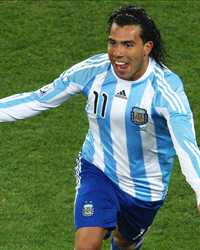
Carlos Tevez is, perhaps, the one major exception. The bulldog-like approach of the Manchester City forward has proved just as effective for Argentina at this tournament as it does in the Premier League. Tevez, who is said not to train properly during the week to conserve his energy, is a special case; he could probably play one hundred matches a season without showing any signs of fatigue. He is, incidentally, the only Premier League player (apart from Manchester United signing Javier Hernandez, who is yet to kick a ball for the Red Devils) to have scored more than one goal at this World Cup.
 The Three Lions underperformed to a man. Next to England, only Italy and France can claim to have had just as disappointing a stay in South Africa. All of the Italian players in Marcelo Lippi’s final 23-man squad play in Serie A and their lack of success points to a general decline in the standard of their domestic league. Poor selection by the national coach and the fact that the treble winning Inter Milan side are not represented in the squad are also partly to blame for their shortfalls.
France, on the other hand, relies on foreign clubs for the majority of its players and a large percentage of them play in England’s top flight. Nicolas Anelka, William Gallas, Bacary Sagna, Patrice Evra, Florent Malouda, Abou Diaby and Gael Clichy made up the Premier League contingent and all of them failed to make an impact in Group A.
The Premier League’s top scorer, Didier Drogba, went into the World Cup with fitness problems relating to a broken arm, but even when he was fit he failed to show the same form we see week in week out for Chelsea, and the Ivory Coast failed to progress to the knockout stages.
Spain is enjoying an excellent run in the competition after an early setback against Switzerland, but which player has drawn the most criticism for his performances in the Spanish press? Liverpool star Fernando Torres, that’s who, as he looks a shadow of the man we see at club level due to a lack of sharpness. Cesc Fabregas is not being criticised too much because he has hardly played for Spain so far, which suggests that he is also physically drained.
In La Liga, they have a two week winter break at the end of December and the League Cup in Spain was abolished nearly a decade ago, which took a load off the hectic schedule. La Liga is the Premier League’s major rival for the claim to be Europe’s best domestic competition. If we look at the top scorer charts for the 2009-10 season, an obvious imbalance emerges:
Didier Drogba Lionel Messi
Wayne Rooney Gonzalo Higuain
Darren Bent Cristiano Ronaldo
Carlos Tevez David Villa
Frank Lampard Diego Forlan
Fernando Torres Zlatan Ibrahimovic
Jermain Defoe Roberto Soldado
Cesc Fabregas Luis Fabiano
Emmanuel Adebayor Fernando Llorente
Of the nine top scorers in the Premier League, three are competing in the quarter-finals in South Africa, and only one of them has had what we would call a “good” World Cup. In La Liga, six of the top nine are still present and all six of those have been leaders for their countries, with the exception of Fernando Llorente, although his introduction against Portugal on Tuesday was cited as the moment the balance shifted in Spain’s favour.
Germany is the other squad of 23 (next to England and Italy) with exclusively domestic representation. Needless to say, they have been excellent so far in this tournament and their young team has even exceeded expectations.
Maybe it is time for the FA to look beyond the manager and finally get to the root of the problem with regards the failure of the England team.
If the trend of underperforming Premier League players continues, England will become an increasingly unattractive proposition for top class international professionals. While a drastic exodus is not likely, more players could follow Robinho’s route. It appears the Brazilian star, who has been in great form for Brazil in this World Cup, got out just in time when he left Manchester City for Santos on loan in January.
“I think all the England players are really tired at this competition.” That was the only excuse from the Italian manager the day after the 4-1 defeat to Germany; for Capello, the blame lies squarely at the Premier League’s feet. The theory is that the proliferation of games at the end of the season, in addition to the fact that Premier League clubs have two cups to compete in during the year as well as possible European duties, inevitably leads to physical and mental burnout.

On the evidence of South Africa 2010, Sven and Fabio are absolutely right. There are more players who ply their trade in England at the World Cup than from any other country; of 736 registered players, 117 are attached to English clubs:
ENGLAND: 117 (16.05%)
GERMANY: 84 (11.42%)
ITALY: 80 (10.88%)
SPAIN: 59 (8.02%)
FRANCE: 45 (6.12%)
Yet, if you look at the players who have shone in South Africa, how many of them are from the Premier League?
Carlos Tevez is, perhaps, the one major exception. The bulldog-like approach of the Manchester City forward has proved just as effective for Argentina at this tournament as it does in the Premier League. Tevez, who is said not to train properly during the week to conserve his energy, is a special case; he could probably play one hundred matches a season without showing any signs of fatigue. He is, incidentally, the only Premier League player (apart from Manchester United signing Javier Hernandez, who is yet to kick a ball for the Red Devils) to have scored more than one goal at this World Cup.
France, on the other hand, relies on foreign clubs for the majority of its players and a large percentage of them play in England’s top flight. Nicolas Anelka, William Gallas, Bacary Sagna, Patrice Evra, Florent Malouda, Abou Diaby and Gael Clichy made up the Premier League contingent and all of them failed to make an impact in Group A.
The Premier League’s top scorer, Didier Drogba, went into the World Cup with fitness problems relating to a broken arm, but even when he was fit he failed to show the same form we see week in week out for Chelsea, and the Ivory Coast failed to progress to the knockout stages.
Spain is enjoying an excellent run in the competition after an early setback against Switzerland, but which player has drawn the most criticism for his performances in the Spanish press? Liverpool star Fernando Torres, that’s who, as he looks a shadow of the man we see at club level due to a lack of sharpness. Cesc Fabregas is not being criticised too much because he has hardly played for Spain so far, which suggests that he is also physically drained.
In La Liga, they have a two week winter break at the end of December and the League Cup in Spain was abolished nearly a decade ago, which took a load off the hectic schedule. La Liga is the Premier League’s major rival for the claim to be Europe’s best domestic competition. If we look at the top scorer charts for the 2009-10 season, an obvious imbalance emerges:
Didier Drogba Lionel Messi
Wayne Rooney Gonzalo Higuain
Darren Bent Cristiano Ronaldo
Carlos Tevez David Villa
Frank Lampard Diego Forlan
Fernando Torres Zlatan Ibrahimovic
Jermain Defoe Roberto Soldado
Cesc Fabregas Luis Fabiano
Emmanuel Adebayor Fernando Llorente
Of the nine top scorers in the Premier League, three are competing in the quarter-finals in South Africa, and only one of them has had what we would call a “good” World Cup. In La Liga, six of the top nine are still present and all six of those have been leaders for their countries, with the exception of Fernando Llorente, although his introduction against Portugal on Tuesday was cited as the moment the balance shifted in Spain’s favour.
Germany is the other squad of 23 (next to England and Italy) with exclusively domestic representation. Needless to say, they have been excellent so far in this tournament and their young team has even exceeded expectations.
Maybe it is time for the FA to look beyond the manager and finally get to the root of the problem with regards the failure of the England team.
If the trend of underperforming Premier League players continues, England will become an increasingly unattractive proposition for top class international professionals. While a drastic exodus is not likely, more players could follow Robinho’s route. It appears the Brazilian star, who has been in great form for Brazil in this World Cup, got out just in time when he left Manchester City for Santos on loan in January.
Subscribe to:
Posts (Atom)

