
Argentina vs Germany 15:00 BST / 16:00 CET
Paraguay vs Spain 19:30 BST / 20:30 CET
Saturday, July 3, 2010


Friday, July 2, 2010
We're at the business end
The first quarter-final match on Friday afternoon throws up the biggest clash of the tournament so far, as Holland and Brazil meet at the Nelson Mandela Bay stadium in Port Elizabeth. Both teams have been showcasing a cautious brand of football in South Africa so far, which flies in the face of the two nations’ glamorous football heritages.
Holland and Brazil’s head to head record in international football marginally favours the South Americans. They have drawn 4 times but Brazil edge it having won 3 to Holland’s 2. The last time they met in the knockout stages of a World Cup was back in France ’98 when the Selecao beat The Flying Dutchmen on penalties at the semi-final stage.
Many pundits are predicting a classic encounter between two traditionally attacking sides full of flair but neither team is likely to suddenly turn reckless. It is far more likely to be a tactical battle played in deep areas, with the match being decided on the counter attack.
 The major threat to an exciting spectacle is that these two teams will cancel each other out, as is often the case when we have a meeting between two 4-2-3-1 formations. This is not Dunga’s preferred shape, his team more closely resembles a 4-2-2-2 when everyone is fit, but injury and suspension will force the 1994 cup winning captain’s hand.
Ramires is unavailable due to a ban and Elano has not managed to shake off an ankle injury in time to contend for a place in midfield. Felipe Melo is also a minor doubt with an ankle knock, so Josue will start next to Gilberto Silva in the holding midfield role if the Juventus player fails to prove his fitness. Of these three stars, it is Elano’s absence that is felt the most and which will precipitate a shift to the 4-2-3-1. Dani Alves will come in as his replacement and Alves will inevitably drift wide right, with plenty of licence to play higher up the pitch than he does for Barcelona, safe in the knowledge that he has Maicon behind him as protection.
Kaka and Wesley Sneijder are the playmakers who usually dictate play for these respective teams but they are likely to find their options and influence on the game reduced by the two holding midfielders marking them. Thus the game could be won out wide and the right wing is a place where both managers will instruct their players to attack.
Maicon and Dani Alves have boundless energy between them to target 35-year old Holland left back Giovanni van Bronckhorst. Robinho has been shifting sides a lot and he is also likely to find more joy against Gio than against the tireless young Ajax right back Gregory van der Wiel.
Bert van Marwijk will also urge his team to focus on the opposing left back. Michel Bastos plays much higher up the pitch for Lyon than he does for Brazil and, although he has not been exposed so far in South Africa, he may find he has his work cut out for him against the most destabilising player on the pitch, Arjen Robben.
If Holland win this encounter, I can see it coming down to the Bayern Munich man’s influence. This will only be his second game after injury ruled him out of the group stage but, if anything, that may make him fresher than most of the others.
In attacking terms, I think these teams are very evenly matched. Robin van Persie has not come good yet in this World Cup but he has all the talent to do so just when it counts. Luis Fabiano has found the net three times and is the obvious goal threat for Brazil. Which one is more likely to make an impact? It is impossible to tell.
If Brazil are going to win, and they are favourites to do so, it is because they are more solid defensively and do tend to dictate play from a deep position in midfield. Either way, it could be a classic, if not in terms of skill and flair, certainly from a tactical perspective.
 In the other quarter-final today, South American outsiders Uruguay face Ghana. Not many people were expecting these teams to get this far at the start of the tournament but there is a chance for both nations to make history. Ghana is looking to become the first African team to reach a World Cup semi-final, while Uruguay is bidding for a place in the final four for the first time since 1970.
Oscar Tabarez’s team should have the beating of the Black Stars if they play to their strengths and attack their opponents from the outset. In Diego Forlan, Luis Suarez and Edison Cavani they have one of the most formidable attacking triumvirates in this competition.
In the last match against South Korea, Uruguay invited the Asians back into the match after taking the lead and subsequently easing their foot off the gas. The Koreans equalised but were then beaten into submission as La Celeste went back on the offensive. This time, the South Americans must resist caution; Ghana’s numerically and physically superior midfield will cause Tabarez’s team big problems if they employ a similar tactic in Johannesburg.
Holland and Brazil’s head to head record in international football marginally favours the South Americans. They have drawn 4 times but Brazil edge it having won 3 to Holland’s 2. The last time they met in the knockout stages of a World Cup was back in France ’98 when the Selecao beat The Flying Dutchmen on penalties at the semi-final stage.
Many pundits are predicting a classic encounter between two traditionally attacking sides full of flair but neither team is likely to suddenly turn reckless. It is far more likely to be a tactical battle played in deep areas, with the match being decided on the counter attack.

Ramires is unavailable due to a ban and Elano has not managed to shake off an ankle injury in time to contend for a place in midfield. Felipe Melo is also a minor doubt with an ankle knock, so Josue will start next to Gilberto Silva in the holding midfield role if the Juventus player fails to prove his fitness. Of these three stars, it is Elano’s absence that is felt the most and which will precipitate a shift to the 4-2-3-1. Dani Alves will come in as his replacement and Alves will inevitably drift wide right, with plenty of licence to play higher up the pitch than he does for Barcelona, safe in the knowledge that he has Maicon behind him as protection.
Kaka and Wesley Sneijder are the playmakers who usually dictate play for these respective teams but they are likely to find their options and influence on the game reduced by the two holding midfielders marking them. Thus the game could be won out wide and the right wing is a place where both managers will instruct their players to attack.
Maicon and Dani Alves have boundless energy between them to target 35-year old Holland left back Giovanni van Bronckhorst. Robinho has been shifting sides a lot and he is also likely to find more joy against Gio than against the tireless young Ajax right back Gregory van der Wiel.
Bert van Marwijk will also urge his team to focus on the opposing left back. Michel Bastos plays much higher up the pitch for Lyon than he does for Brazil and, although he has not been exposed so far in South Africa, he may find he has his work cut out for him against the most destabilising player on the pitch, Arjen Robben.
If Holland win this encounter, I can see it coming down to the Bayern Munich man’s influence. This will only be his second game after injury ruled him out of the group stage but, if anything, that may make him fresher than most of the others.
In attacking terms, I think these teams are very evenly matched. Robin van Persie has not come good yet in this World Cup but he has all the talent to do so just when it counts. Luis Fabiano has found the net three times and is the obvious goal threat for Brazil. Which one is more likely to make an impact? It is impossible to tell.
If Brazil are going to win, and they are favourites to do so, it is because they are more solid defensively and do tend to dictate play from a deep position in midfield. Either way, it could be a classic, if not in terms of skill and flair, certainly from a tactical perspective.

Oscar Tabarez’s team should have the beating of the Black Stars if they play to their strengths and attack their opponents from the outset. In Diego Forlan, Luis Suarez and Edison Cavani they have one of the most formidable attacking triumvirates in this competition.
In the last match against South Korea, Uruguay invited the Asians back into the match after taking the lead and subsequently easing their foot off the gas. The Koreans equalised but were then beaten into submission as La Celeste went back on the offensive. This time, the South Americans must resist caution; Ghana’s numerically and physically superior midfield will cause Tabarez’s team big problems if they employ a similar tactic in Johannesburg.

Thursday, July 1, 2010
Premier League is the problem, not England
It was not a tactical problem, it wasn’t poor leadership or a lack of unity. According to Fabio Capello, England’s early exit from the World Cup came down to one crippling factor: fatigue.
“I think all the England players are really tired at this competition.” That was the only excuse from the Italian manager the day after the 4-1 defeat to Germany; for Capello, the blame lies squarely at the Premier League’s feet. The theory is that the proliferation of games at the end of the season, in addition to the fact that Premier League clubs have two cups to compete in during the year as well as possible European duties, inevitably leads to physical and mental burnout.
 This is nothing new. Sven-Goran Eriksson spent all five of his years as England manager campaigning for a winter break. At the very least, he wanted to put the Premier League on an even keel with La Liga, Serie A and the Bundesliga.
On the evidence of South Africa 2010, Sven and Fabio are absolutely right. There are more players who ply their trade in England at the World Cup than from any other country; of 736 registered players, 117 are attached to English clubs:
ENGLAND: 117 (16.05%)
GERMANY: 84 (11.42%)
ITALY: 80 (10.88%)
SPAIN: 59 (8.02%)
FRANCE: 45 (6.12%)
Yet, if you look at the players who have shone in South Africa, how many of them are from the Premier League?
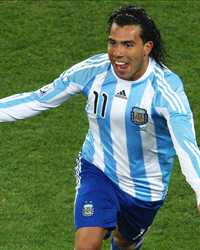
Carlos Tevez is, perhaps, the one major exception. The bulldog-like approach of the Manchester City forward has proved just as effective for Argentina at this tournament as it does in the Premier League. Tevez, who is said not to train properly during the week to conserve his energy, is a special case; he could probably play one hundred matches a season without showing any signs of fatigue. He is, incidentally, the only Premier League player (apart from Manchester United signing Javier Hernandez, who is yet to kick a ball for the Red Devils) to have scored more than one goal at this World Cup.
 The Three Lions underperformed to a man. Next to England, only Italy and France can claim to have had just as disappointing a stay in South Africa. All of the Italian players in Marcelo Lippi’s final 23-man squad play in Serie A and their lack of success points to a general decline in the standard of their domestic league. Poor selection by the national coach and the fact that the treble winning Inter Milan side are not represented in the squad are also partly to blame for their shortfalls.
France, on the other hand, relies on foreign clubs for the majority of its players and a large percentage of them play in England’s top flight. Nicolas Anelka, William Gallas, Bacary Sagna, Patrice Evra, Florent Malouda, Abou Diaby and Gael Clichy made up the Premier League contingent and all of them failed to make an impact in Group A.
The Premier League’s top scorer, Didier Drogba, went into the World Cup with fitness problems relating to a broken arm, but even when he was fit he failed to show the same form we see week in week out for Chelsea, and the Ivory Coast failed to progress to the knockout stages.
Spain is enjoying an excellent run in the competition after an early setback against Switzerland, but which player has drawn the most criticism for his performances in the Spanish press? Liverpool star Fernando Torres, that’s who, as he looks a shadow of the man we see at club level due to a lack of sharpness. Cesc Fabregas is not being criticised too much because he has hardly played for Spain so far, which suggests that he is also physically drained.
In La Liga, they have a two week winter break at the end of December and the League Cup in Spain was abolished nearly a decade ago, which took a load off the hectic schedule. La Liga is the Premier League’s major rival for the claim to be Europe’s best domestic competition. If we look at the top scorer charts for the 2009-10 season, an obvious imbalance emerges:
Didier Drogba Lionel Messi
Wayne Rooney Gonzalo Higuain
Darren Bent Cristiano Ronaldo
Carlos Tevez David Villa
Frank Lampard Diego Forlan
Fernando Torres Zlatan Ibrahimovic
Jermain Defoe Roberto Soldado
Cesc Fabregas Luis Fabiano
Emmanuel Adebayor Fernando Llorente
Of the nine top scorers in the Premier League, three are competing in the quarter-finals in South Africa, and only one of them has had what we would call a “good” World Cup. In La Liga, six of the top nine are still present and all six of those have been leaders for their countries, with the exception of Fernando Llorente, although his introduction against Portugal on Tuesday was cited as the moment the balance shifted in Spain’s favour.
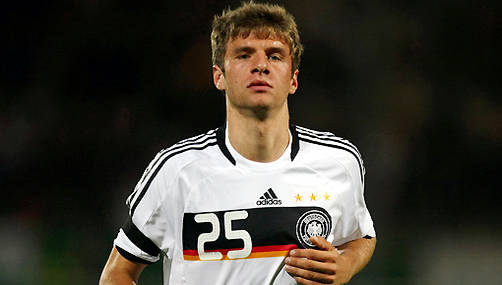
Germany is the other squad of 23 (next to England and Italy) with exclusively domestic representation. Needless to say, they have been excellent so far in this tournament and their young team has even exceeded expectations.
Maybe it is time for the FA to look beyond the manager and finally get to the root of the problem with regards the failure of the England team.
If the trend of underperforming Premier League players continues, England will become an increasingly unattractive proposition for top class international professionals. While a drastic exodus is not likely, more players could follow Robinho’s route. It appears the Brazilian star, who has been in great form for Brazil in this World Cup, got out just in time when he left Manchester City for Santos on loan in January.
“I think all the England players are really tired at this competition.” That was the only excuse from the Italian manager the day after the 4-1 defeat to Germany; for Capello, the blame lies squarely at the Premier League’s feet. The theory is that the proliferation of games at the end of the season, in addition to the fact that Premier League clubs have two cups to compete in during the year as well as possible European duties, inevitably leads to physical and mental burnout.

On the evidence of South Africa 2010, Sven and Fabio are absolutely right. There are more players who ply their trade in England at the World Cup than from any other country; of 736 registered players, 117 are attached to English clubs:
ENGLAND: 117 (16.05%)
GERMANY: 84 (11.42%)
ITALY: 80 (10.88%)
SPAIN: 59 (8.02%)
FRANCE: 45 (6.12%)
Yet, if you look at the players who have shone in South Africa, how many of them are from the Premier League?
Carlos Tevez is, perhaps, the one major exception. The bulldog-like approach of the Manchester City forward has proved just as effective for Argentina at this tournament as it does in the Premier League. Tevez, who is said not to train properly during the week to conserve his energy, is a special case; he could probably play one hundred matches a season without showing any signs of fatigue. He is, incidentally, the only Premier League player (apart from Manchester United signing Javier Hernandez, who is yet to kick a ball for the Red Devils) to have scored more than one goal at this World Cup.
France, on the other hand, relies on foreign clubs for the majority of its players and a large percentage of them play in England’s top flight. Nicolas Anelka, William Gallas, Bacary Sagna, Patrice Evra, Florent Malouda, Abou Diaby and Gael Clichy made up the Premier League contingent and all of them failed to make an impact in Group A.
The Premier League’s top scorer, Didier Drogba, went into the World Cup with fitness problems relating to a broken arm, but even when he was fit he failed to show the same form we see week in week out for Chelsea, and the Ivory Coast failed to progress to the knockout stages.
Spain is enjoying an excellent run in the competition after an early setback against Switzerland, but which player has drawn the most criticism for his performances in the Spanish press? Liverpool star Fernando Torres, that’s who, as he looks a shadow of the man we see at club level due to a lack of sharpness. Cesc Fabregas is not being criticised too much because he has hardly played for Spain so far, which suggests that he is also physically drained.
In La Liga, they have a two week winter break at the end of December and the League Cup in Spain was abolished nearly a decade ago, which took a load off the hectic schedule. La Liga is the Premier League’s major rival for the claim to be Europe’s best domestic competition. If we look at the top scorer charts for the 2009-10 season, an obvious imbalance emerges:
Didier Drogba Lionel Messi
Wayne Rooney Gonzalo Higuain
Darren Bent Cristiano Ronaldo
Carlos Tevez David Villa
Frank Lampard Diego Forlan
Fernando Torres Zlatan Ibrahimovic
Jermain Defoe Roberto Soldado
Cesc Fabregas Luis Fabiano
Emmanuel Adebayor Fernando Llorente
Of the nine top scorers in the Premier League, three are competing in the quarter-finals in South Africa, and only one of them has had what we would call a “good” World Cup. In La Liga, six of the top nine are still present and all six of those have been leaders for their countries, with the exception of Fernando Llorente, although his introduction against Portugal on Tuesday was cited as the moment the balance shifted in Spain’s favour.
Germany is the other squad of 23 (next to England and Italy) with exclusively domestic representation. Needless to say, they have been excellent so far in this tournament and their young team has even exceeded expectations.
Maybe it is time for the FA to look beyond the manager and finally get to the root of the problem with regards the failure of the England team.
If the trend of underperforming Premier League players continues, England will become an increasingly unattractive proposition for top class international professionals. While a drastic exodus is not likely, more players could follow Robinho’s route. It appears the Brazilian star, who has been in great form for Brazil in this World Cup, got out just in time when he left Manchester City for Santos on loan in January.
Subscribe to:
Posts (Atom)

